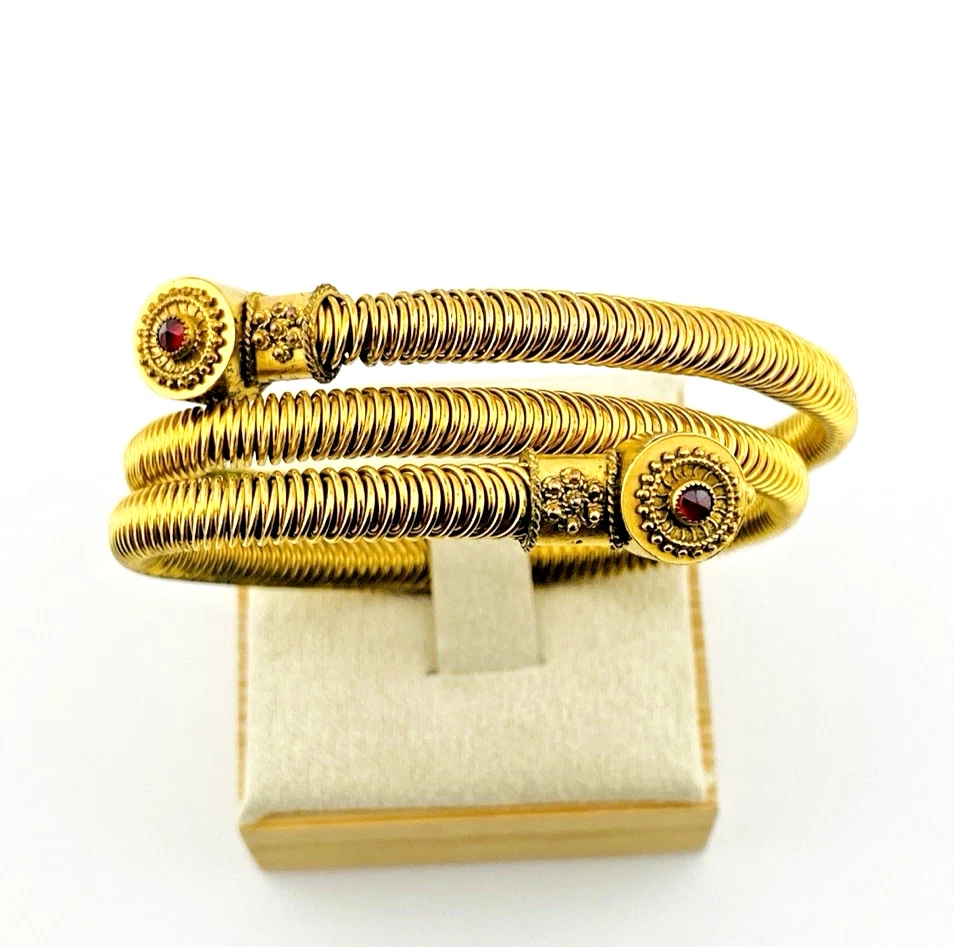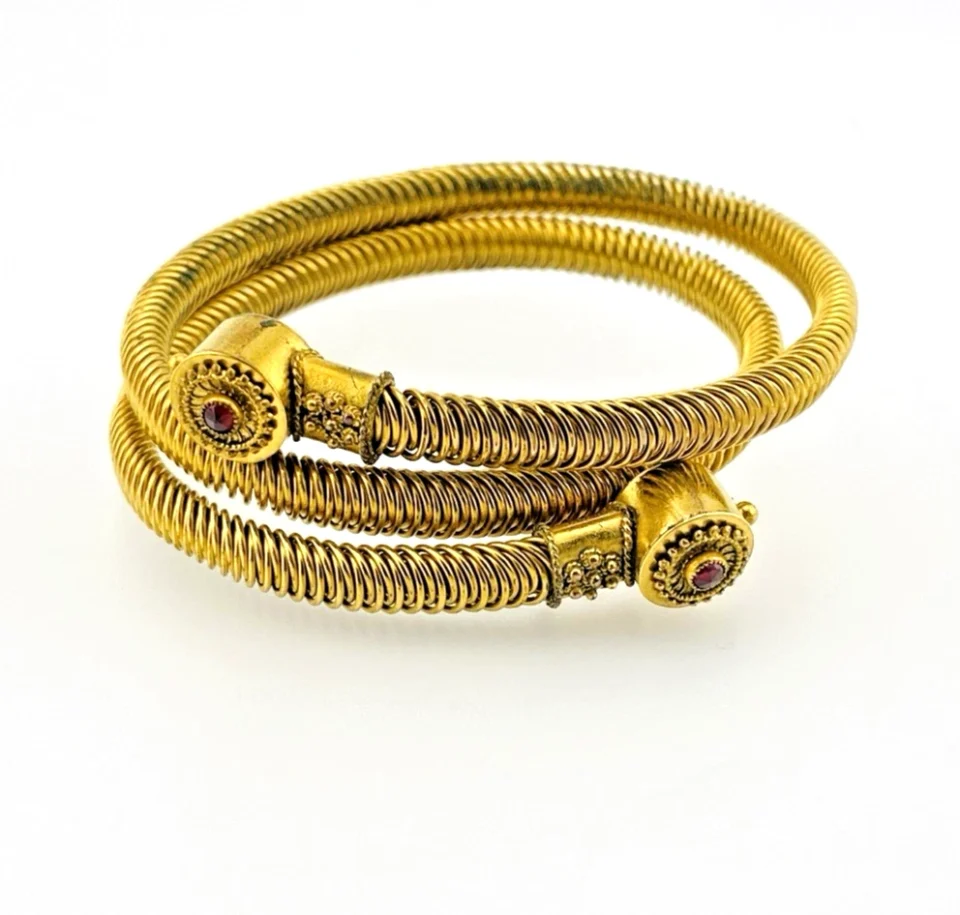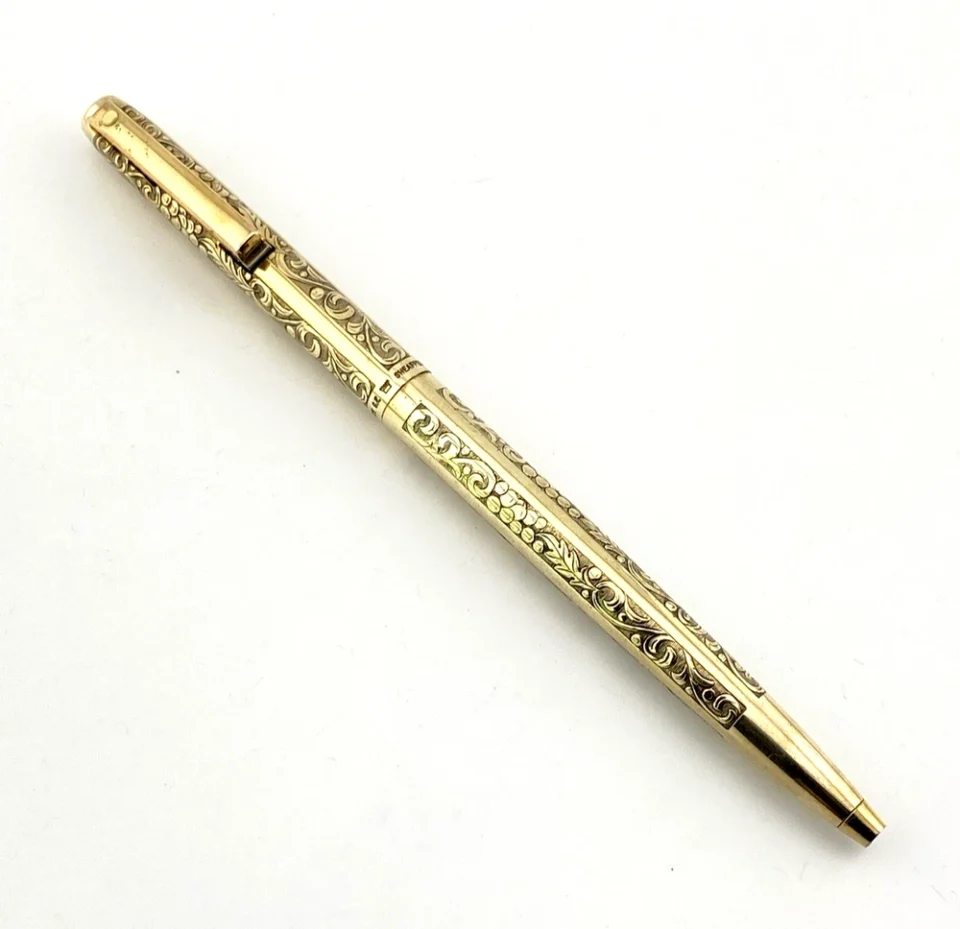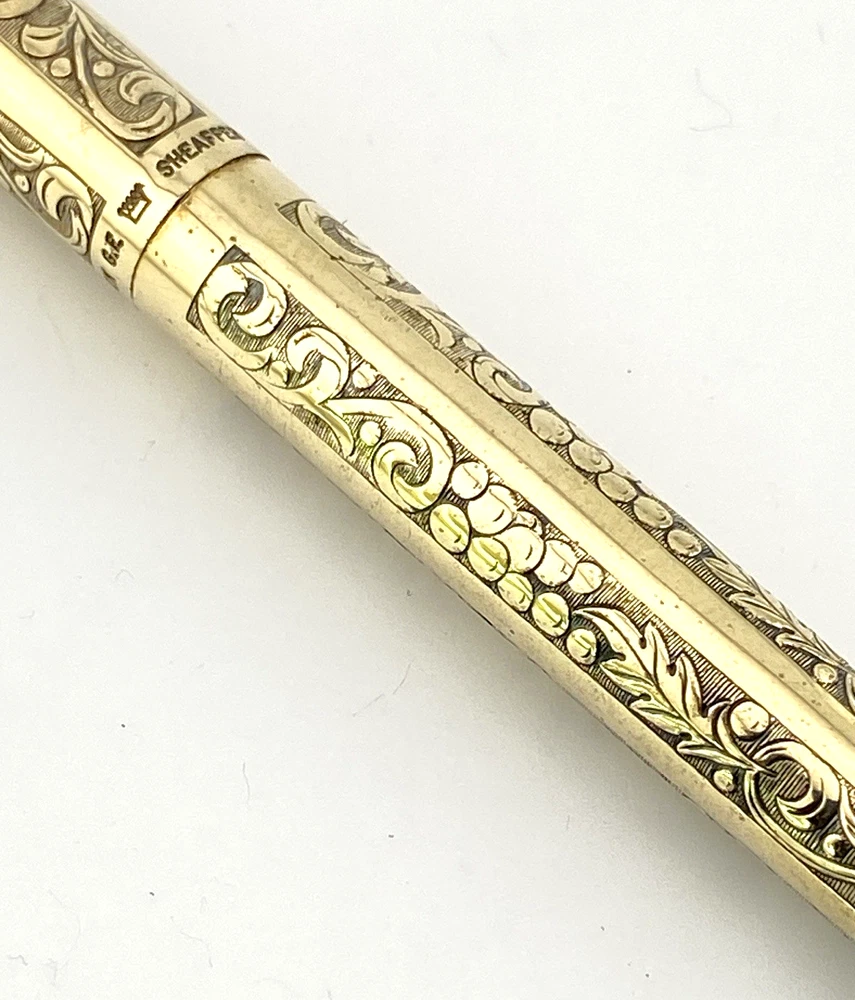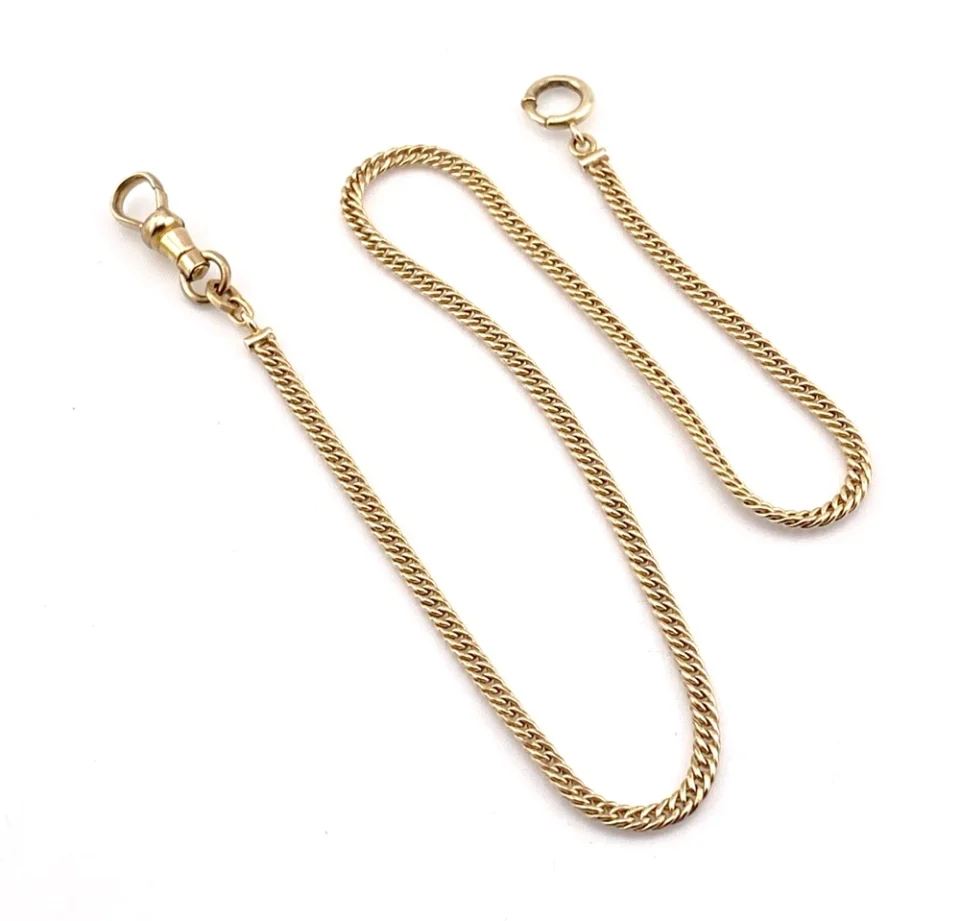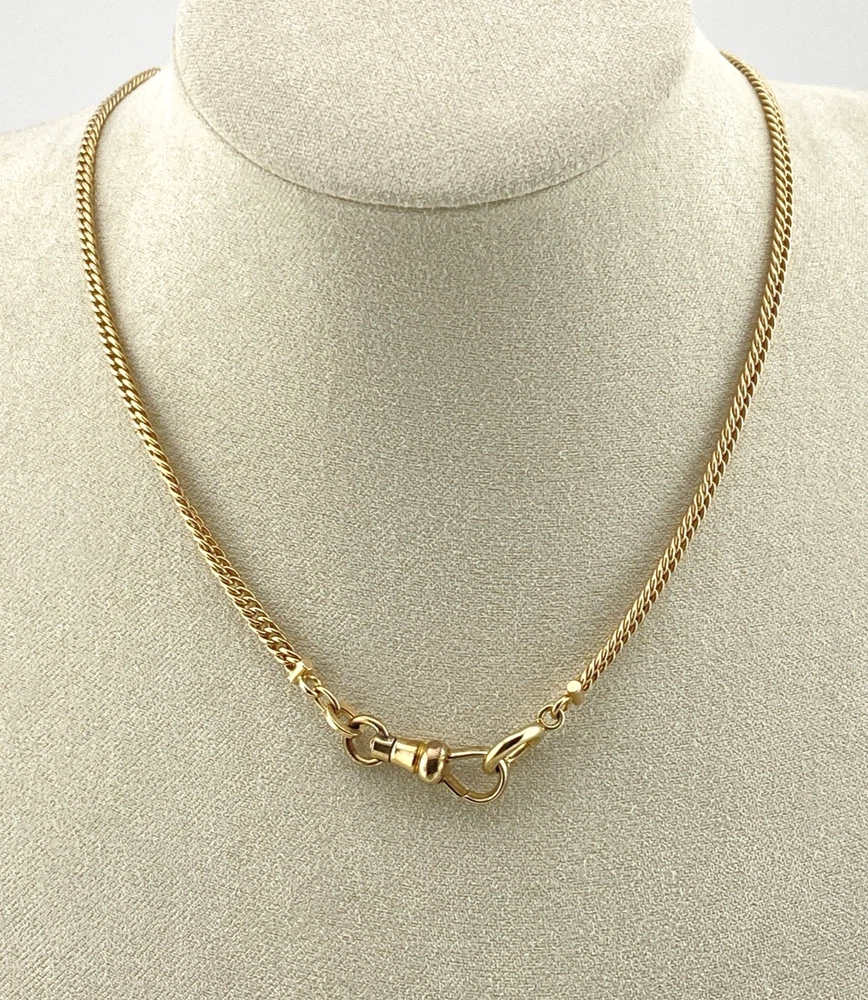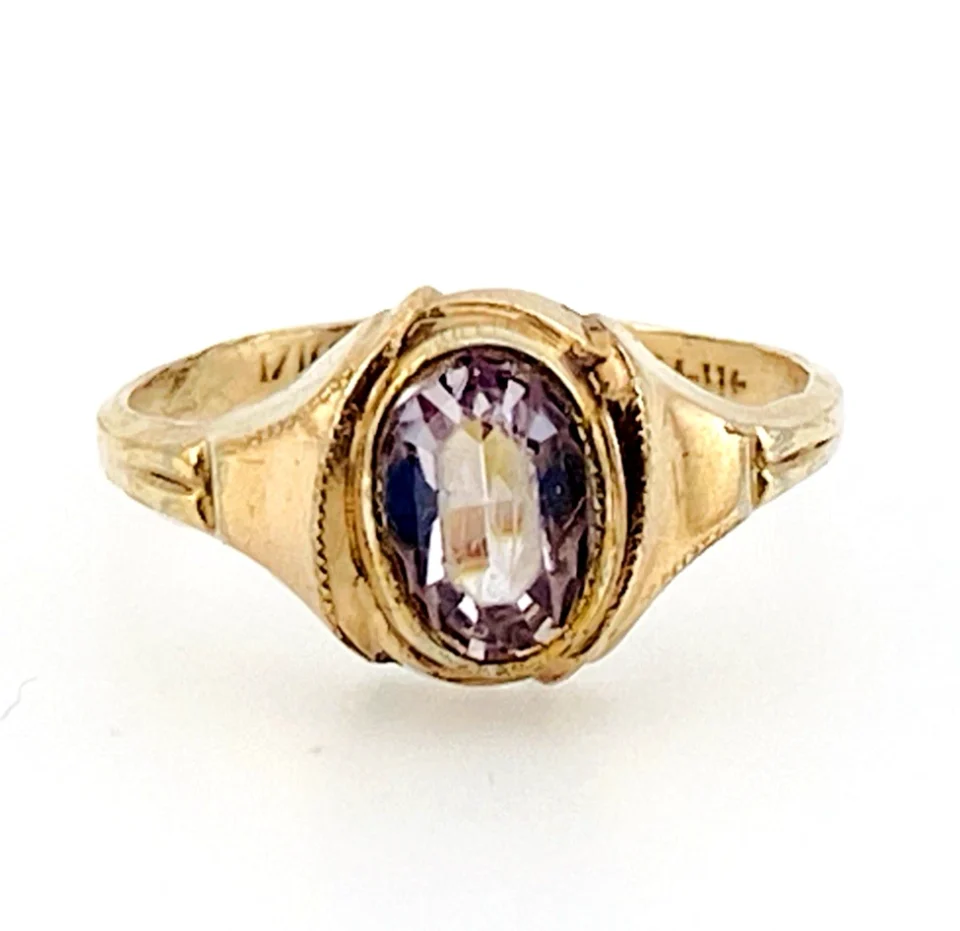
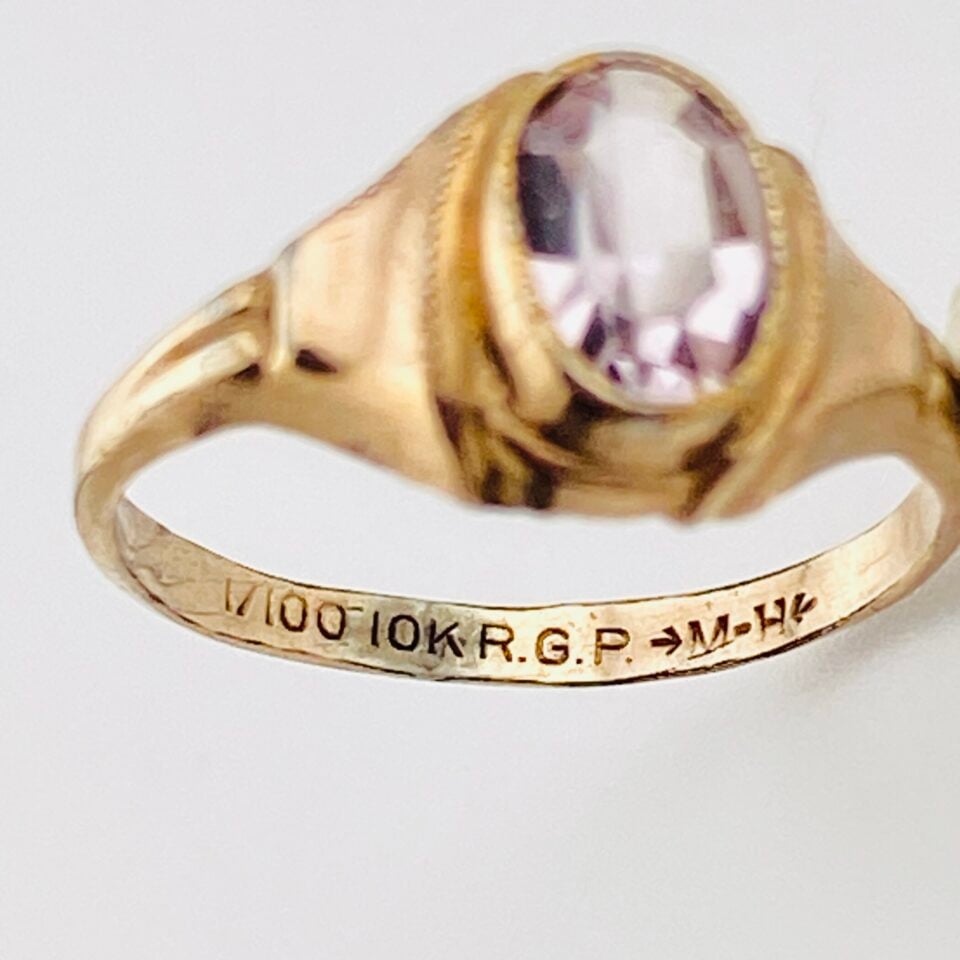
If you collect vintage jewelry, you have probably encountered marks such as 1/20 12K GF, 1/40 10K RGP, or 1/100 10K RGP. They may look like obscure manufacturing codes, but each part of the mark tells us something about how the jewelry was made—and how much gold alloy it contains.
Gold filled and rolled gold are related materials, but the terms are not interchangeable. The principal difference is the proportion of gold alloy mechanically bonded to the underlying metal.
What Is Gold Filled?
Despite its name, gold filled jewelry is not filled with gold. It is made by mechanically bonding a layer of gold alloy to a supporting metal, traditionally through heat and pressure.
Under current U.S. guidance, the gold alloy must be at least 10 karat and account for at least 1/20 of the weight of the metal in the article for the jewelry to be described as gold filled. That means the bonded gold alloy represents at least 5% of the article’s metal weight.
A mark such as:
1/20 12K GF
can be read as:
- 1/20 — the 12-karat gold alloy accounts for one-twentieth of the metal weight
- 12K — the bonded layer is 12-karat gold
- GF — gold filled
Gold filled jewelry became especially popular as an attractive and more affordable alternative to solid gold. It was widely used for lockets, watch chains, brooches, rings, bracelets, eyeglass frames, and other jewelry intended for regular wear.
Many well-made antique and vintage examples have survived beautifully. The gold surface may soften or show localized wear over time, particularly on clasps, ring shanks, edges, and other high-contact areas, but it is generally far more substantial than an ordinary electroplated finish.
For a closer look at its history and how the material is manufactured, read our complete guide to gold filled jewelry.
What Is Rolled Gold?
“Rolled gold” is commonly used as shorthand for rolled gold plate, often abbreviated RGP.
Like gold filled material, rolled gold plate is produced by mechanically bonding gold alloy to another metal. The distinction lies primarily in the proportion of gold.
Rolled gold plate may contain a smaller proportion of gold alloy than gold filled material. When the amount is below the proportion required for gold filled jewelry, the fractional amount is disclosed in the mark.
For example:
1/40 12K RGP
means that 12-karat gold alloy accounts for one-fortieth, or 2.5%, of the article’s metal weight.
A mark of:
1/100 10K RGP
means that the mechanically applied layer is 10-karat gold and represents one-hundredth, or 1%, of the metal weight.
That is substantially less gold alloy than the 5% required for a gold filled designation, but it is still a mechanically bonded gold layer—not merely a gold-colored finish.
Gold Filled vs. Rolled Gold at a Glance
| Mark | Gold-alloy proportion | Meaning |
|---|---|---|
| 1/20 12K GF | 5% | 12-karat gold filled |
| 1/20 14K GF | 5% | 14-karat gold filled |
| 1/40 12K RGP | 2.5% | 12-karat rolled gold plate |
| 1/100 10K RGP | 1% | 10-karat rolled gold plate |
The fraction refers to the proportion of gold alloy, not pure gold. The karat designation tells us the purity of that alloy. For this reason, both parts of the mark matter.
Is Rolled Gold the Same as Gold Plated?
Not exactly.
Gold filled and rolled gold plate traditionally involve a layer of gold alloy applied through a mechanical bonding process. Gold electroplate is deposited onto the underlying metal using an electrolytic process and is generally much thinner.
This does not mean every gold filled item will remain pristine forever or that every electroplated item will wear quickly. Longevity also depends on the thickness and quality of the finish, how the jewelry was constructed, where it is worn, and how it has been cared for.
As a practical rule, however, vintage gold filled jewelry usually offers a more substantial gold layer than conventional gold electroplate. Rolled gold plate generally falls between gold filled and thin electroplating, although the actual fraction marked on the article provides a more meaningful comparison than the name alone.
Terms such as gold wash and gold flash usually describe especially thin applications that tend to wear more quickly.
Why the Exact Terminology Matters
It is tempting to call any bonded gold material “gold filled,” particularly when a vintage item has the warm appearance and quality construction associated with gold filled jewelry. But the hallmark should be read precisely.
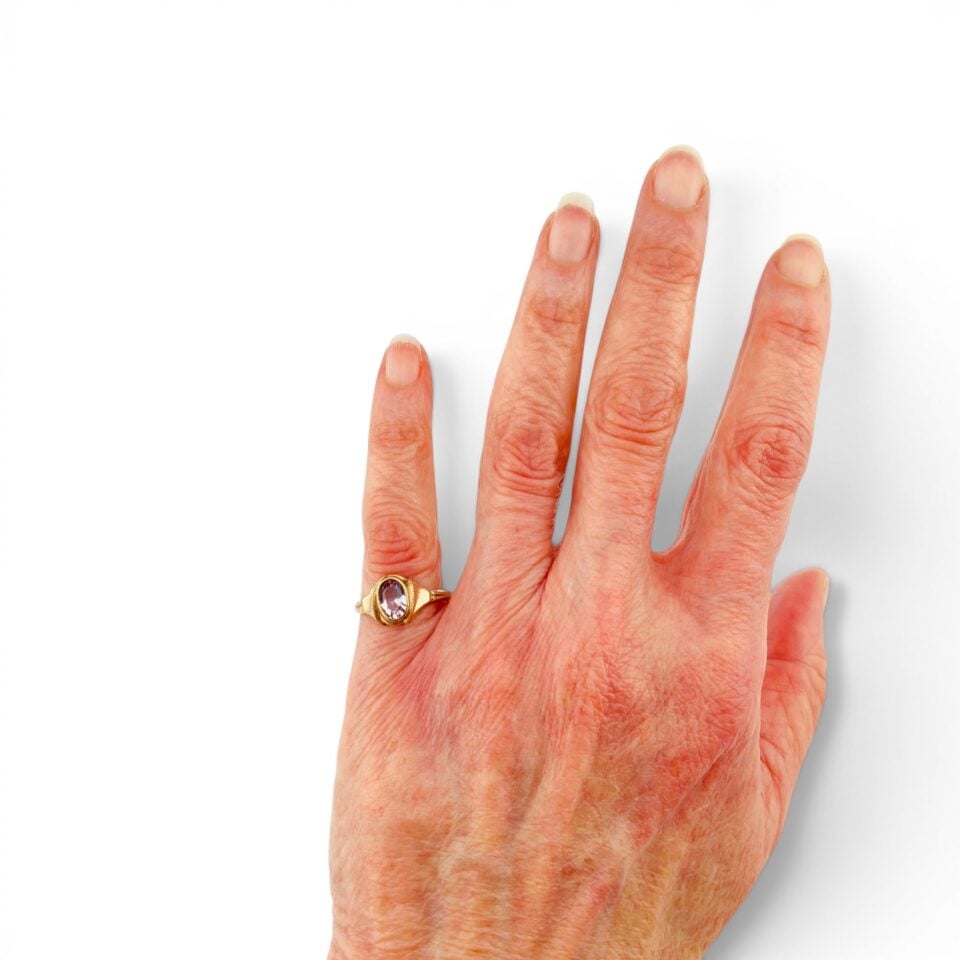
A ring marked 1/100 10K RGP is rolled gold plate, not gold filled. Describing it accurately does not diminish its charm or collectibility. It simply tells the buyer what the material is.
This is especially important with vintage jewelry because quality is not determined by metal content alone. Design, age, craftsmanship, condition, maker, rarity, and wearability all contribute to an item’s desirability.
A beautifully preserved rolled gold ring can be far more appealing than a poorly made modern gold filled one. The mark is part of its story—not its entire value.
How Durable Is Vintage Rolled Gold?
Condition varies considerably.
A rolled gold necklace or brooch may retain its finish for decades because it receives relatively little friction. Rings and bracelets normally experience more contact and may show wear first along the edges, inside the band, or on raised details.
When considering vintage rolled gold jewelry, look for:
- Even color across the visible surfaces
- Wear along edges and high points
- Exposed base metal inside ring bands or around clasps
- Darkening, corrosion, or flaking
- Evidence of previous polishing or repair
Gentle care will help preserve the surface. Avoid abrasive polishing cloths, chemical jewelry cleaners, perfume, hairspray, and prolonged contact with moisture. Clean only when necessary using a soft, slightly damp cloth, then dry the jewelry carefully.
What These Marks Tell Us
Fractional marks are wonderfully informative once you know how to read them. They reveal both the purity of the gold alloy and its proportion relative to the article’s metal weight.
The simplest way to remember the distinction is:
- Gold filled: Mechanically bonded gold alloy amounting to at least 1/20 of the metal weight
- Rolled gold plate: Mechanically bonded gold alloy that may be present in a smaller, disclosed proportion
- Gold electroplate: Gold applied through an electrolytic plating process
None of these terms means solid gold, but neither gold filled nor rolled gold should be dismissed as merely “gold tone.” Both are genuine forms of gold-covered jewelry with long histories in jewelry manufacturing.
For collectors, those tiny stamped fractions offer one more connection to the way a vintage jewel was made—and a better understanding of what has allowed it to survive.
Latest Gold Filled Jewelry
Explore recently added antique and vintage gold filled jewelry selected for craftsmanship, warmth, and lasting wearability.